EN
EN

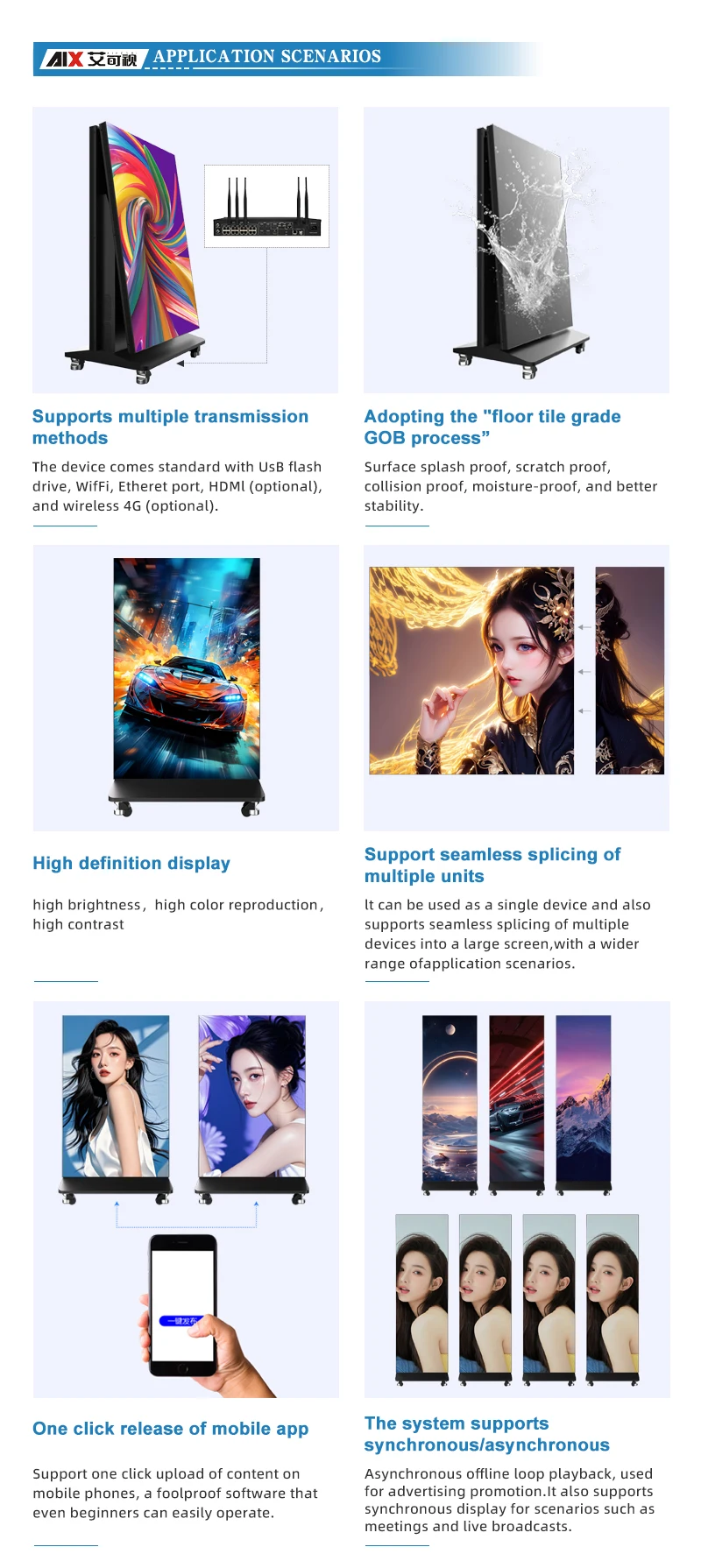
LED vs LCD Poster Screens: Durability, Efficiency, and Total Cost of Ownership
Lifespan and reliability: comparing LED and LCD poster screens under 24/7 mall operation demands
LED poster screens can last around 80,000 hours or more, which is roughly twice as long as most LCD units that typically only make it to about 40,000 hours when running nonstop day after day according to a study by Ponemon Institute in 2023. The reason behind this longer life comes down to how LEDs are built. They don't have those fragile parts found in LCDs such as CCFL backlights or the sensitive liquid crystal layers that tend to break down over time. We see this difference clearly in busy shopping malls where LCD screens usually need replacing every couple of years because their backlights fade, panels get burned in from static images, and various moving parts just wear out. All these issues end up costing businesses significantly more money in the long run, maybe even close to 40% extra compared to what they would spend on LED alternatives.
Environmental resilience: IP ratings, thermal management, and dust resistance for poster screens in food courts and entryways
Retail areas can be pretty tough on equipment, especially places like food courts where greasy air particles float around or building entrances that deal with constant temperature changes and moisture. That's why IP65 rated LED poster screens are so important for keeping out dust and resisting water splashes. These screens have both passive and active cooling systems that keep them running at good temperatures even after hours of operation. Compare this to regular LCD screens which tend to lose brightness and color quality much quicker when left on in warm environments over 30 degrees Celsius. Plus, LED technology comes with a modular design that makes it easier to swap out parts when needed. This means less time spent fixing problems and simpler maintenance work, which matters a lot in those busy spots where displays need to stay visible and functional without interruption.
| Feature | LED Poster Screen | LCD Poster Screen |
|---|---|---|
| Avg. Lifespan | 80,000+ hours | 40,000 hours |
| 24/7 Reliability | Minimal performance drop | Backlight/panel degradation |
| IP Rating Suitability | IP65 standard for dust/liquid | Rarely exceeds IP54 |
| Energy Use | ~500W (typical 55") | ~750W (equivalent size) |
| 10-Year TCO Savings* | 34% lower | Higher maintenance costs |
| *Total Cost of Ownership (TCO) includes energy, repairs, and replacements |
Physical Integration and Strategic Placement of Poster Screens
Data-driven positioning: using foot traffic heatmaps to maximize poster screen visibility at corridor junctions
Retailers who want their digital posters to actually work start by looking at where people naturally stop and move around stores. They analyze anonymous foot traffic data through heat maps to find those spots where customers hang out longest or pass through fastest. These hotspots tend to be corridor crossings, edges of food courts, and areas near escalators where shoppers often make last minute buying choices. According to a recent survey from JDA (2024), about two thirds of impulse buys happen right there. When screens are positioned between roughly 4 feet and 5 feet off the ground, and placed anywhere from 15 to 30 feet away from these natural stopping places, people remember what they see on them almost half again as much as when screens are just randomly installed. This simple placement trick transforms regular walking patterns into real opportunities for brands to connect with consumers.
Mounting adaptability: recessed, suspended, and freestanding poster screen solutions for diverse mall architectures
Poster screens now support three primary mounting strategies—each engineered to align with distinct architectural realities:
- Recessed mounts embed displays flush into walls or structural columns, preserving sightlines and floor space in narrow corridors or heritage-constrained areas
- Suspended configurations, often using aircraft-grade cable systems, deliver unobstructed visibility in open atriums while maintaining safe pedestrian clearance
- Freestanding units, equipped with weighted, rotation-capable bases, enable agile deployment near seasonal activations or pop-up promotions—with 180° content reorientation to match shifting traffic flows
Retailers adopting installation methods matched to their spatial context report 30% higher measured engagement versus one-size-fits-all placements—proving that physical integration is not just logistical, but strategic.
FAQ
What is the average lifespan of LED poster screens compared to LCD screens?
LED poster screens typically last around 80,000 hours, which is roughly twice the lifespan of LCD screens that last about 40,000 hours when used continuously.
Why are IP65 rated LED poster screens important in retail areas?
IP65 rated LED poster screens are vital in retail due to their resistance against dust and water. They are well-suited for challenging environments like food courts and entrances that face constant temperature changes and moisture.
How does strategic placement of poster screens affect customer engagement?
Strategically placed poster screens, such as near high-traffic areas like corridor crossings and escalators, significantly enhance customer engagement by aligning with natural foot traffic.