EN
EN

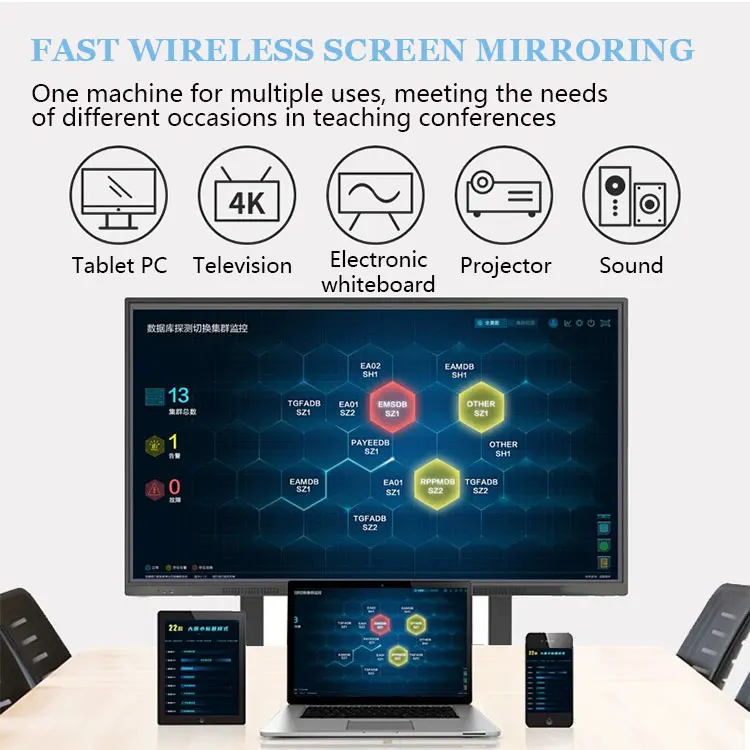
Boosting Student Engagement Through Interactive Board Technology
Declining attention spans and the digital engagement gap in modern classrooms
Today's teachers are dealing with some serious issues around keeping students focused. Recent data from the 2024 Harris Poll shows almost half of all instructors notice their classes aren't as engaged as they used to be. And what's even more concerning? More than eight out of ten students say there just isn't enough room for them to explore things that interest them in class. We're seeing this big disconnect happen because many old school teaching approaches just don't click with kids who grew up surrounded by technology. That's where interactive whiteboards come in handy. These tools turn regular lectures into something much more hands on. Research suggests classrooms using these boards see about a third more students staying on task during lessons compared to those sticking with traditional methods. When students can actually interact with material right on the screen - touching it, writing notes, working together in real time - it helps fight off the distractions that plague so many modern classrooms.
How multimodal interaction activates neural pathways for deeper learning
Interactive boards work by combining different ways we experience things at once - what we see, hear, and touch. This method actually matches something called dual coding theory, basically meaning when people get info through more than one sense like seeing a diagram while someone explains it out loud, their brains make better connections. Kids who move map pieces around with their fingers or play with math problems on screen tend to remember those lessons longer because their bodies are involved in the learning process. Research into how our brains work shows these kinds of mixed sensory experiences can boost memory retention somewhere around 75 percent over just listening or reading alone. What makes interactive boards so effective is how they bring together moving pictures, three dimensional models, and immediate responses from teachers, creating brain friendly environments where knowledge sticks around much longer.
| Learning Method | Retention Rate | Engagement Level |
|---|---|---|
| Unimodal Lecture | 25% | Low |
| Multimodal Interaction | 75% | High |
Supporting Inclusive Learning with Interactive Board Flexibility
Addressing diverse needs: Neurodiverse, EAL, and kinesthetic learners
Interactive whiteboards can be tweaked to suit different ways kids learn best thanks to their customizable settings. Students who think differently often find relief when teachers adjust things like screen brightness or simplify complicated visuals on the board. When it comes to English language learners, built-in translators and picture-based dictionaries really help close those understanding gaps during lessons. Kids who learn by doing get excited about interactive features they can actually touch and manipulate, whether that means moving word pieces around or adding notes directly onto diagrams. The whole point is making sure every student can reach the material in whatever way works for them, which naturally leads to better classroom involvement. These boards handle everything from physical needs to brain processing styles and language barriers, turning regular classrooms into places where everyone has a fair shot at keeping up.
Dual-coding theory in action: Visual, auditory, and tactile input integration
The dual coding theory basically says mixing pictures and words helps people remember things better. Interactive whiteboards put this into practice by bringing together moving images, voiceovers, and physical interaction all at once. Take a biology class for example where kids watch cells divide on screen while listening to a teacher explain what's happening, then actually drag labels onto different parts themselves. When several senses get involved at the same time, our brains form stronger memories because different areas light up simultaneously. Studies show these kinds of lessons lead to about 40 percent better understanding than just talking or showing slides alone. Abstract concepts suddenly become concrete when we can see them, hear about them, and touch them too.
Enabling Real-Time Assessment and Adaptive Instruction via Interactive Boards
Closing the feedback loop: From delayed grading to instant formative insights
Interactive whiteboards are changing how teachers assess student learning, cutting down those long waiting periods for grades into something much quicker. With these tools, instructors can see what students understand during class itself through things like marking up work in real time, seeing who raises their hands digitally, and watching them solve problems right there. Research suggests that getting instant feedback helps kids remember concepts around 30% better, so teachers don't have to wait until later to notice when someone gets confused. Moving away from just end-of-term tests toward checking understanding as it happens makes sense from a brain science perspective too. When corrections happen sooner rather than later, students actually learn faster. This approach isn't just theory though many teachers report seeing real differences in how quickly concepts stick with this kind of ongoing assessment strategy.
Embedded tools - polls, quizzes, and analytics - that drive responsive teaching
Built-in features like anonymous polls and drag-and-drop quizzes generate actionable data during lessons. Teachers visualize class-wide understanding through real-time charts, identify struggling learners via response tracking, and dynamically adjust content depth. For example:
- Quick polls reveal topic familiarity before introducing new concepts
- Interactive diagrams let students manipulate variables while analytics log their reasoning paths
- Annotation tools enable teachers to highlight errors in submitted work instantly, demonstrating corrections visually
Scaling Teaching Impact: Interactive Boards in Hybrid, Collaborative, and Curriculum-Aligned Settings
Interactive whiteboards really boost how well teachers can do their job in today's changing schools. When we have those mixed classes where some kids are there physically and others join online, these boards let everyone take part at the same time. No more that tired feeling from staring at screens all day that happens so often with regular Zoom calls. Group work gets way better too because students can write notes together, tackle math problems side by side, or play around with images and videos on the same screen space. Studies point out that working together like this makes students pay attention about 40 percent more than when they're just doing things alone. Teachers love being able to tweak lessons on the fly thanks to built-in stuff like ready made lesson plans tied to standards, easy to move around media elements, and dashboards showing who's keeping up. All this means lessons stay on track with what needs to be learned while still letting different students go at their own speed. Works great no matter if the class is face to face, fully online, or somewhere in between.
FAQ
What are interactive whiteboards?
Interactive whiteboards are digital screens used in classrooms which allow students to interact with the displayed material via touch and input, enhancing engagement and learning.
How do interactive boards help in student engagement?
Interactive boards foster engagement by allowing students to interact with content, write notes, and participate in lessons visually and physically.
Do interactive whiteboards aid different learning styles?
Yes, these boards are adaptable to different learning styles, including neurodiverse, English language learners, and kinesthetic learners, by offering customizable settings and interactive features.
Can interactive boards be used in hybrid and online settings?
Yes, interactive boards support both in-person and online settings, facilitating collaborative and interactive learning in varied classroom environments.
Table of Contents
- Boosting Student Engagement Through Interactive Board Technology
- Supporting Inclusive Learning with Interactive Board Flexibility
- Enabling Real-Time Assessment and Adaptive Instruction via Interactive Boards
- Scaling Teaching Impact: Interactive Boards in Hybrid, Collaborative, and Curriculum-Aligned Settings
- FAQ