EN
EN

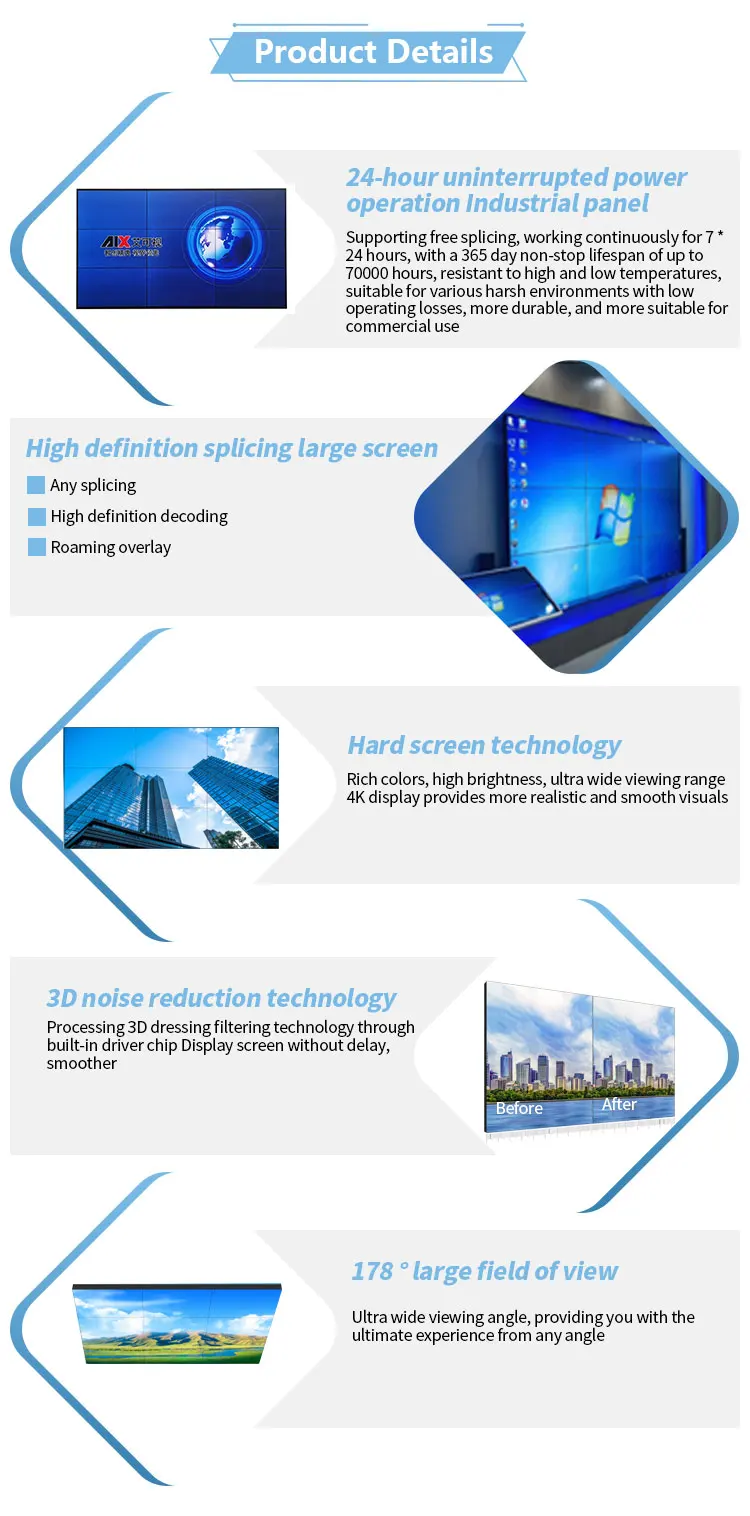
Technical Advantages of LCD Splicing Screens for Enterprise Reliability
Brightness, Narrow Bezels, and Wide Viewing Angles for Mission-Critical Visibility
Enterprise level LCD splicing screens can reach impressive brightness levels, sometimes over 1500 nits, which makes them readable even when there's lots of ambient light around. Think control rooms during daylight hours or those busy transit hubs where sunlight pours through glass walls. The ultra thin bezels, usually less than 1mm thick, help reduce the gaps between panels so multiple screens look almost like one big display. These screens also have really good viewing angles, getting close to 178 degrees both ways, so colors stay consistent no matter where someone stands relative to the screen. That matters a lot for things like security monitoring stations or industrial process visualization setups where several people might be looking at different parts of the same information simultaneously. The consistent image quality helps maintain proper situational awareness in places like power plant control centers or emergency command posts where staff members are constantly moving around and need clear visuals from various angles throughout their shifts.
24/7 Operational Durability and Precise Multi-Screen Synchronization
Designed to run non-stop, these LCD splicing screens come packed with heavy duty parts, backup power systems, and smart cooling solutions so they can stay online around the clock. Most network ops centers and stock trading desks expect at least 99.9% uptime from their displays, which these screens consistently deliver. The panels sync up so precisely that there's practically no lag between them, keeping everything aligned down to the millisecond across the whole video wall setup. What does this mean in practice? Traders get crystal clear views of market data without any flickering or delay, while security teams monitor multiple camera feeds simultaneously without missing a beat. Even fractions of a second matter when making split second calls in high pressure environments.
Proven Enterprise Use Cases for LCD Splicing Screens
Command Centers and Control Rooms: Real-Time Situational Awareness
Across emergency response centers, utility monitoring facilities, and military command centers, LCD video walls have become essential tools for real-time situational awareness. These displays work together flawlessly, stay online without interruption, and deliver crystal clear images that let operators keep track of security cameras, internet-connected sensors, and supply chain movements all at once. The backup systems built into these installations matter a lot - think dual power sources and replaceable components that can be swapped out while the system keeps running. Most people who run control rooms swear by LCD splicing tech after seeing how reliable it is when things get busy. According to recent industry reports, around 9 out of 10 operators rank this technology highest because it doesn't crash or distort even when handling massive amounts of data over long periods.
Digital Signage in High-Traffic Venues: Airports, Malls, and Transit Hubs
LCD spliced displays have become a staple in places where visibility matters most because they combine striking visuals with durability that lasts years. These modular setups work surprisingly well on all sorts of surfaces from rounded building exteriors to sloped ceilings and even awkwardly shaped corners without breaking the flow of images across the screen. With ratings above 100,000 operating hours before noticeable dimming or color shifts occur, these screens need far less maintenance than traditional alternatives which cuts down on replacement costs over time. Airport managers tell us passengers spend about 40% more time looking at flight updates, directions, or ads shown on these screens compared to older models. People actually engage better with the content thanks to colors that stay true no matter where someone stands in relation to the display, whether they're standing right under it or viewing from across a busy terminal.
Scalable Deployment and Total Cost Efficiency of LCD Splicing Screens
Modular Design Enables Seamless Scalability Across Wall Sizes and Configurations
LCD splicing systems come built for modularity. Standardized panels, easy-to-install mounting gear, and consistent electrical connections let businesses grow their setups bit by bit. Companies can start small with something like a 2x2 wall in meeting areas and later expand to massive 10x6 displays in control rooms without tearing apart existing infrastructure. When these systems expand, they maintain proper edge alignment between screens, keep colors matching across all panels, and preserve even lighting throughout the whole setup. This means no ugly gaps or mismatched sections that happen when people just throw together random displays. The ability to scale forward makes sense for spaces that change over time. Businesses don't have to spend big bucks upfront on equipment they might not need right away.
Native Integration with AV/IT Systems and Content Management Platforms
The displays work right out of the box with standard protocols like HDMI 2.1, DisplayPort 1.4, and HDBaseT, so they can connect directly to enterprise AV switchers, IP video distribution systems, and existing IT setups without much hassle. They also play nice with major CMS platforms such as Scala, Strata, and BrightSign. This means companies can manage schedules, send emergency alerts, handle playlists, and run diagnostics remotely even when screens are spread across multiple locations. When manufacturers skip those proprietary middleware layers, it actually makes things simpler for everyone involved. Companies save money on both initial setup and long term maintenance too. Recent enterprise AV audits show around 30% less spending on integration and management when using these open systems instead of the closed alternatives that come with their own special software requirements.
FAQ
What is an LCD splicing screen?
An LCD splicing screen is a display system composed of multiple LCD panels stitched together to form a larger visual area. They are used in enterprise settings to create seamless and bright displays for mission-critical information.
How do LCD splicing screens maintain reliability?
LCD splicing screens maintain reliability by using heavy-duty components, backup power systems, precise synchronization, and smart cooling solutions. These features ensure they can operate continuously with minimal downtime.
Why are LCD splicing screens popular in high-traffic venues?
They're popular because they deliver striking visuals with high durability and minimal maintenance. Their modular design adapts to various surfaces, maintaining flow and clarity of information, making them highly engaging in busy environments like airports and malls.