EN
EN

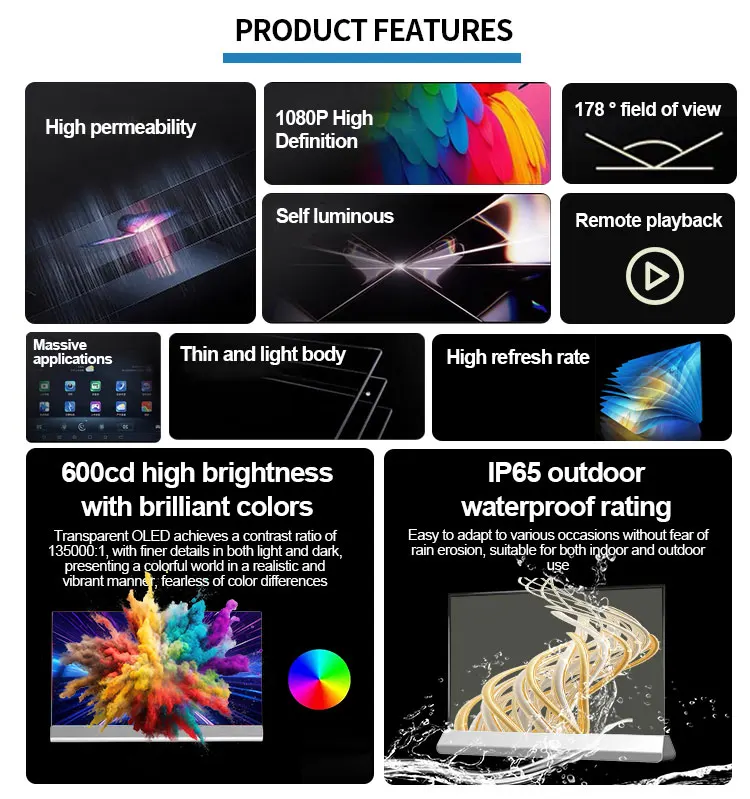
Self-Emissive Pixel Technology: The Core of OLED Color Vibrancy
How individual red, green, and blue subpixels emit light without a backlight
OLED screens work by having each tiny red, green, and blue subpixel produce its own light when electricity flows through them. No need for a separate backlight means each pixel can be controlled individually for brightness and color. Regular LCD displays are different because they use white light that goes through liquid crystals and color filters. OLED technology lets those subpixels glow on their own thanks to special organic materials set to particular light frequencies. Take a red subpixel as an example it shines around 620 nanometers without getting mixed up with green or blue light from neighboring pixels. The result is much purer colors than what's possible with traditional backlit displays.
Elimination of backlight bleed and color crosstalk for purer hues
Because each OLED subpixel controls its own light output—and can switch off completely—the technology avoids backlight bleed and color crosstalk entirely. True blacks (0 nits) are achieved with no residual glow, yielding an effectively infinite contrast ratio. This pixel-level isolation ensures:
- Accurate color saturation, as subpixels emit only their designated wavelength;
-
Zero contamination, since inactive neighbors contribute no stray light.
As a result, OLED displays achieve 100–120% DCI-P3 color volume—surpassing LCDs, whose gamut is limited by backlight diffusion and filter inefficiencies.
Wider Native Color Gamut Enabled by OLED Emissive Materials
Phosphorescent and TADF emitters expanding spectral purity and gamut coverage
Today's OLED screens incorporate phosphorescent materials along with something called TADF emitters to get the most out of their internal quantum efficiency. These newer technologies can actually capture both singlet and triplet excitons, which was impossible with those old fluorescent materials from back in the day. Manufacturers are getting really good at this molecular engineering stuff now. They tweak the emission spectra right down at the subpixel level so there's minimal overlap between the red, green, and blue color channels. When we talk about spectral precision here, what really matters is that companies have stopped using those traditional color filters. Without those filters messing things up, the display maintains better brightness levels while keeping colors true to their original form. This means we see much more vivid, pure primary colors straight from the source itself instead of having them degraded through some kind of optical compromise process.
DCI-P3 and Rec. 2020 performance benchmarks vs. LCD and QD-enhanced displays
When it comes to color reproduction, OLED panels beat LCDs hands down. They hit that sweet spot of 100% DCI-P3 coverage which is what movie studios use when grading films professionally. Most top-end LCD screens only manage around 80-90% of that same range. Looking at Rec. 2020 standards for Ultra HD broadcasts tells the same story. OLED displays cover roughly 70-75% of this wider spectrum, whereas regular LCDs struggle with just 50-60%, and even those fancy quantum dot enhanced models max out at about 65-70%. Researchers have made some progress with hybrid quantum dot OLED tech in labs reaching close to 90% Rec. 2020, but there are still problems with manufacturing yields and long term stability stopping these from hitting store shelves anytime soon. What really matters though is how OLED handles colors no matter where someone sits or how bright the screen gets. With LCDs, the backlight tends to mess with colors depending on viewing angle, which just isn't an issue with OLED technology.
Infinite Contrast Ratio and True Blacks Amplify Perceived Color Vibrancy
OLED technology gets pretty close to having an infinite contrast ratio since each individual pixel actually produces its own light and can completely turn off, creating real black (#000000) with absolutely no glow. This solves the problem of backlight bleeding that's common with LCD screens, where leftover light makes dark areas look washed out and colors around them get dulled down. Without all that extra light messing things up, colors just pop better. Reds become richer, blues feel more intense, and greens stand out more naturally. Some tests show colors can reach about 40% more saturation without needing any kind of software tricks to make it happen. That's why professionals who care deeply about accurate color representation still point to OLED as their go-to choice, beating even those fancy quantum dot displays in most lab settings.
FAQs
What is OLED's self-emissive pixel technology?
OLED's self-emissive technology involves each subpixel producing its own light without relying on a backlight, which allows for precise brightness and color control.
How does OLED achieve true blacks?
Each OLED subpixel can completely switch off, thus achieving true black by emitting zero light, eliminating any residual glow common in other display technologies.
What advantages do phosphorescent and TADF emitters provide?
Phosphorescent and TADF emitters allow OLED screens to capture singlet and triplet excitons, expanding spectral purity and enabling a wider color gamut.
How does OLED performance compare in terms of color gamut coverage?
OLED panels tend to cover a broader color gamut, reaching 100% DCI-P3 and approximately 70-75% of Rec. 2020, surpassing traditional LCD and some QD-enhanced displays.